
In pain at 2am?
He answers.
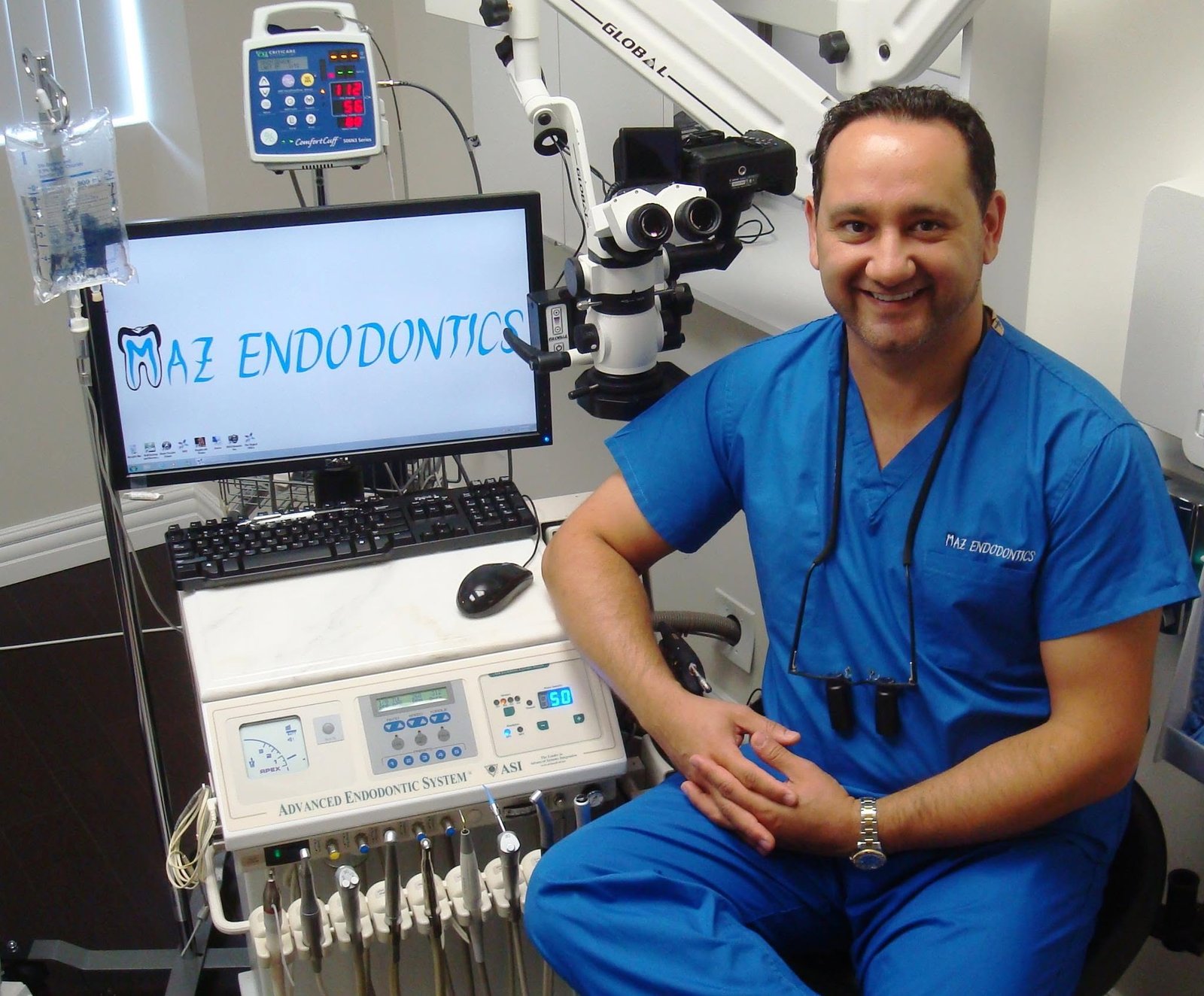
Most emergency dentists mean same-day during office hours. Dr. Maz means any hour. He has driven to the office in the middle of the night to meet patients. Call and you reach the person who will treat you.
and holidays
by Dr. Maz
emergencies
When is extraction actually necessary?
Most teeth can be saved. Root canal therapy, retreatment, and apicoectomy all exist to keep your natural tooth in place. Dr. Maz will exhaust those options first every single time.
But some situations leave no safe alternative. In those cases, removing the tooth quickly is what protects the surrounding bone, gums, and neighboring teeth from further damage.
Three situations where removal is the answer
Accidents and trauma
A fall, a sports injury, or a hard impact can fracture a tooth below the gumline. When the break goes too deep, there is no structure left to rebuild on. Removal becomes the only safe option.
Severe infection
When infection destroys most of the tooth structure or the tooth cracks vertically through the root, a root canal cannot fix it. Leaving it in place lets the infection spread to the bone.
Impacted wisdom teeth
Wisdom teeth are the last molars to come in. When the jaw has no room for them, they grow sideways and press into neighboring teeth. That pressure causes pain, crowding, and infection.
What actually happens on the day
Most extractions take between 10 and 60 minutes depending on the tooth. Here is what to expect.
Numb the area
Local anesthesia is given first. You feel pressure but no pain. IV sedation is available if you would rather sleep through it entirely.
Loosen the tooth
The gum tissue is separated from the tooth. For impacted or broken teeth, a small incision is made to reach it properly.
Remove and clean
The tooth is lifted out of the socket. The site is cleaned thoroughly to prevent infection from developing afterward.
Close and heal
Stitches are placed if needed, and gauze controls the bleeding. You leave with clear aftercare instructions and a follow-up plan.

Does it hurt? Not the way you think.
Most people are surprised. The infected or damaged tooth is what was causing the pain in the first place. Removing it brings immediate relief for the majority of patients.
Recovery takes a few days
Expect some soreness and swelling for the first two to three days. Ice helps. Pain medication is prescribed when needed. Stick to soft foods at first, then return to normal eating after a couple of days.
Avoid smoking, alcohol, and strenuous activity while healing. These are the main causes of dry socket, which is the most common complication and is almost entirely preventable.
Replacing the tooth matters more than you think
A gap is not just cosmetic. Your jawbone needs the pressure of a tooth to maintain its density. Without it, bone loss starts and your bite slowly shifts.
Waiting makes it worse
An infected tooth does not heal on its own. If the pain suddenly stops, that usually means the nerve has died, not that the infection is gone. It keeps spreading toward the jaw and surrounding bone. Call us the moment you suspect a problem. Dr. Maz sees emergencies 24/7.
Is this actually an emergency?
If you are asking the question, it usually is. Here are the four signals that mean you should call now rather than wait.
Bleeding
A little blood when flossing is normal. Constant or heavy bleeding that will not stop is not. Call immediately.
Swelling
Painful swelling in the gums, face, or jaw usually means infection. It can spread quickly and needs same-day care.
Severe pain
Pain intense enough that you are considering an emergency visit is reason enough to make one. Mild pain that suddenly spikes counts too.
Trauma
A hard blow to a tooth needs fast attention. Timing is often what decides whether the tooth can be saved.
What can usually wait
Minor chipping without pain, and mild soreness that stays mild, do not typically require an emergency visit. Book a regular appointment instead. That said, if a large piece of tooth has broken off, or mild pain suddenly becomes severe, call us and we will tell you honestly whether you need to come in now.
What Dr. Maz treats after hours
Emergency root canal
An infected tooth causes intense pain and puts your health at risk. Left untreated, the infection can kill the tooth and spread beyond it. Treatment focuses on three things:
- Clearing out the infection completely
- Stabilizing and sealing the tooth
- Relieving the pain the same visit
Emergency extraction
Sometimes removing the tooth is the only way to stop the problem from getting worse. Dr. Maz knows this is a hard decision and handles it carefully:
- Minimal stress, everything explained first
- Pain-free with local anesthesia or IV sedation
- Full aftercare support and follow-up
Why patients call Dr. Maz first
He actually answers. Other offices advertise emergency care but only during business hours. Dr. Maz takes calls at any hour. Patients have reached him at 2am and been treated by 2:30am.
He stays calm, so you do. Emergencies are stressful enough. Dr. Maz handles every case with a steady, friendly manner. Patients regularly say they were surprised how relaxed the visit felt.
This is all he does. Dr. Maz has built his entire career around endodontics. He performs about 25 root canals a week. When you arrive in pain at midnight, you are seeing a specialist, not a generalist on call.
Knocked out a tooth?
Pick it up by the crown, never the root.
Rinse it gently. Do not use salt water.
If you can, place it back in the socket.
If not, store it in milk or saliva.
Call (310) 248-3636 immediately.
Get here within 30 minutes for the best chance.
Don't wait it out. Call now.
Dental emergencies do not keep office hours, so neither does Dr. Maz. Whatever time it is where you are reading this, the line is open.